


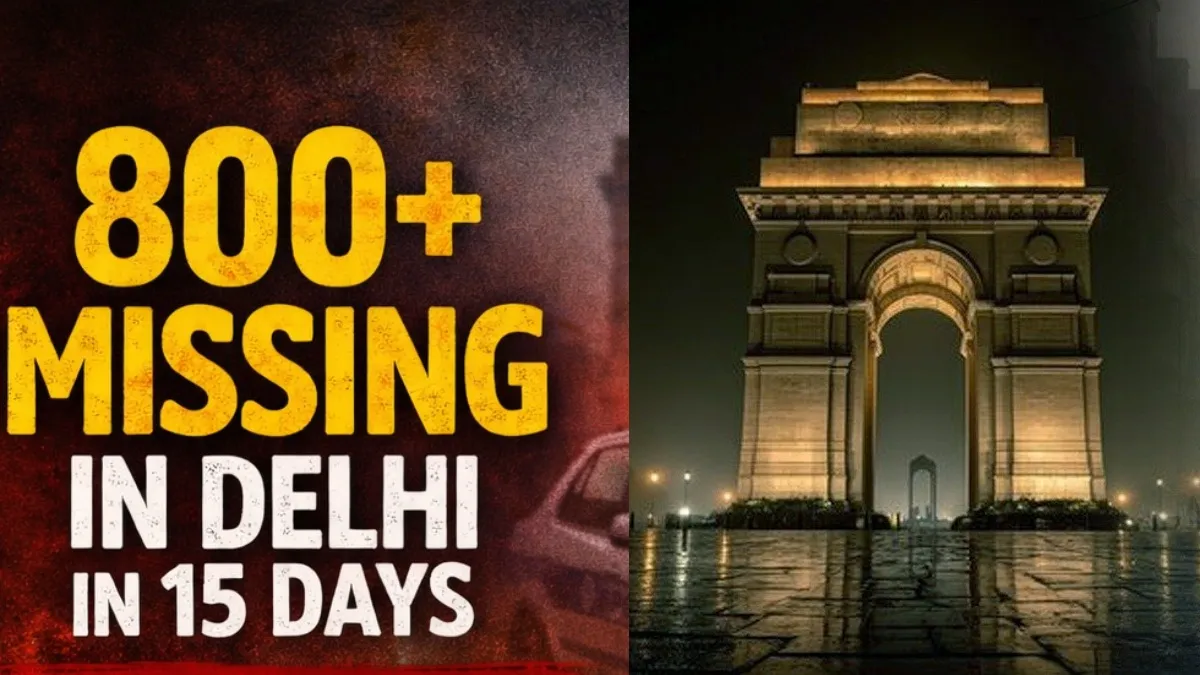
Delhi, the capital of India and one of the largest metropolitan cities in the world, is often seen as a symbol of opportunity, power, and progress. Yet, beneath its fast-paced development and bustling streets lies a growing and deeply troubling issue — the rising number of missing persons. Over the last decade, thousands of individuals have disappeared from the city every year, leaving behind families searching for answers and authorities struggling to keep pace with the scale of the problem. The issue of missing persons in Delhi is not just a law-and-order concern; it is a social, economic, and human rights challenge that demands urgent attention.
Understanding the Scale of the Problem
According to data compiled from police records, media reports, and the National Crime Records Bureau (NCRB), Delhi has consistently reported one of the highest numbers of missing persons among all Indian states and union territories. Over the past ten years, the cumulative total of missing cases in the city is estimated to be well over two lakh. While a large proportion of these individuals are eventually traced, tens of thousands of cases remain unresolved.
The term “missing persons” includes a wide range of situations. Some people leave their homes voluntarily due to family conflicts, financial hardship, or personal reasons. Others may be victims of trafficking, exploitation, abduction, or crime. Children and women form a disproportionately large share of these cases, making the issue particularly sensitive and alarming.
Trends Over the Last Decade
In the early part of the last decade, Delhi already ranked high in missing persons statistics compared to other regions. However, as the city’s population expanded and urban migration increased, the problem grew more complex. The years following 2015 saw a steady rise in reported cases, driven by several factors such as economic pressures, increased reporting awareness, and better documentation by law enforcement agencies.
The COVID-19 pandemic in 2020 and 2021 introduced a new dimension to the crisis. Lockdowns disrupted livelihoods, forced migrant workers to return to their home states, and strained family relationships. While official reporting appeared to dip during this period due to restricted movement and limited access to police stations, many experts believe that the actual number of missing individuals may have been underreported.
In recent years, particularly from 2022 onwards, the numbers have once again risen sharply. Annual reports suggest that more than 20,000 people go missing in Delhi each year, highlighting that the problem is not only persistent but also growing.
Women and Children: The Most Vulnerable
One of the most disturbing aspects of Delhi’s missing persons data is the high proportion of women and children. In many recent years, women and girls have accounted for more than half of all reported missing cases. Teenagers, especially girls between the ages of 12 and 18, appear frequently in police records.
There are multiple reasons behind this trend. In some cases, young people run away from home due to family pressure, forced marriages, or academic stress. In others, they fall prey to traffickers who lure them with promises of jobs, modeling opportunities, or a better life in the city. Once taken away from their familiar surroundings, many find it difficult to escape or seek help.
Children from economically weaker sections are particularly vulnerable. Families living in informal settlements or working as daily wage laborers often lack the resources to track their missing children effectively. For them, the disappearance of a child can mean not only emotional devastation but also the loss of a future source of income.
The Role of Migration and Urbanization
Delhi’s status as a major economic and political hub attracts millions of migrants from across the country. Every year, people arrive in the city in search of employment, education, and better living conditions. While this migration fuels the city’s growth, it also creates conditions that can contribute to the problem of missing persons.
Many migrants live in overcrowded areas with limited access to social services. They often lack formal identification, stable housing, or strong community networks. If someone from such a background goes missing, it becomes much harder for authorities to trace them. Families back in their home states may not even know which police station to approach or how to file a report.
Urban anonymity also plays a role. In a city of over 20 million people, it is easier for individuals to disappear without being noticed. This anonymity can be exploited by criminal networks involved in trafficking, forced labor, and illegal adoption.
Law Enforcement and Reporting Mechanisms
The Delhi Police has established dedicated missing persons units and helplines to address the issue. In many cases, First Information Reports (FIRs) are registered promptly, and details of missing individuals are shared across police networks. Technology has also been introduced, including online portals and databases that allow families to submit information and track cases.
However, the sheer volume of cases places enormous pressure on law enforcement agencies. Police officers often handle multiple investigations simultaneously, making it difficult to devote adequate time and resources to each missing persons report. Coordination between different states is another challenge, as many missing individuals may cross state borders or be taken to other parts of the country.
The National Crime Records Bureau plays a crucial role in compiling national-level data and identifying trends. Its annual “Crime in India” reports provide valuable insights into patterns of missing persons, recovery rates, and demographic breakdowns. However, critics argue that more detailed, real-time, and publicly accessible data is needed to improve transparency and accountability.
Social and Psychological Impact on Families
Behind every statistic is a family living in uncertainty and pain. The disappearance of a loved one creates a unique kind of trauma — one that is defined by not knowing. Families often spend years searching, visiting police stations, hospitals, shelters, and even religious institutions in the hope of finding some trace of the missing person.
The emotional toll is compounded by financial strain. Many families, especially those from lower-income backgrounds, spend significant amounts of money on travel, legal procedures, and private searches. In some cases, the main breadwinner goes missing, leaving the rest of the family struggling to survive.
Social stigma can also be an issue. Families of missing women and girls sometimes face suspicion or judgment from their communities. This can lead to isolation and reluctance to seek help, further complicating the search process.
The Challenge of Trafficking and Exploitation
Human trafficking remains one of the darkest aspects of the missing persons crisis. Delhi’s location and transport connectivity make it a major transit point for trafficking networks. Victims may be forced into domestic work, labor, begging, or sexual exploitation in different parts of the country.
Rescue operations often require coordination between multiple agencies, including state police forces, non-governmental organizations, and child welfare committees. While there have been success stories, the scale of the problem means that many victims remain hidden and unaccounted for.
Technology as a Tool for Change
In recent years, technology has emerged as a powerful ally in the search for missing persons. Facial recognition systems, mobile phone tracking (with legal authorization), and digital databases have helped solve several cases. Social media platforms are also increasingly used to circulate photographs and details of missing individuals, allowing information to reach a wider audience quickly.
However, technology alone is not a solution. It must be supported by strong legal frameworks, trained personnel, and public awareness to be truly effective. Privacy concerns and the risk of misuse also need to be carefully managed.
The Role of Civil Society and NGOs
Non-governmental organizations play a vital role in supporting families and working alongside authorities. Many NGOs run shelters, legal aid programs, and awareness campaigns aimed at preventing trafficking and helping recovered individuals reintegrate into society.
Community involvement is equally important. Local residents, shopkeepers, transport workers, and housing associations can act as the “eyes and ears” of the city, reporting suspicious activities and helping to locate missing individuals.
Moving Forward: What Needs to Be Done
Addressing the missing persons crisis in Delhi requires a multi-pronged approach. First, there must be greater investment in law enforcement capacity, including specialized training for handling sensitive cases involving children and women. Second, data systems need to be improved to allow real-time tracking and better coordination between states.
Public awareness campaigns can educate families about the importance of early reporting and the resources available to them. Schools and community centers can play a role in teaching children about personal safety and how to seek help if they feel threatened.
Finally, tackling the root causes — poverty, lack of education, unemployment, and social inequality — is essential. As long as people continue to migrate to cities under desperate circumstances, the risk of exploitation and disappearance will remain high.
Conclusion
The issue of missing persons in Delhi is a reflection of the city’s broader social and economic challenges. It is a problem that cannot be solved by the police alone. It requires the collective effort of government agencies, civil society, communities, and individuals.
Every missing person represents a life interrupted and a family waiting for answers. By strengthening systems, raising awareness, and addressing the underlying causes, Delhi can move closer to ensuring that fewer people vanish into silence and more families find the closure and justice they deserve.