



On most days, the Speaker’s chair in the Lok Sabha is a symbol of authority, balance, and constitutional duty. It stands elevated, facing rows of lawmakers who represent more than a billion voices across India. In theory, the Speaker is the neutral guardian of parliamentary democracy – the referee who ensures fairness, order, and equal opportunity to speak. In practice, however, this role has increasingly become the center of a national debate.
Across television studios, university campuses, tea stalls, and social media platforms, a question is often whispered and sometimes shouted: Is the Lok Sabha Speaker truly independent, or has the office become an extension of the government in power?
This question is not new. But recent parliamentary confrontations – especially those involving opposition leaders like Rahul Gandhi and rulings by Speaker Om Birla — have brought the issue into sharper focus. For many citizens, what happens inside the House feels distant. Yet, the emotions surrounding these moments reveal a deeper anxiety about how democracy itself is functioning.
The Ideal: What the Speaker Is Meant to Be
The Speaker of the Lok Sabha is not just another political figure. Constitutionally and traditionally, the Speaker is expected to rise above party loyalties after taking office. Once elected, the Speaker is supposed to act as a neutral authority – protecting the rights of both the ruling party and the opposition.
In theory, the Speaker’s role is simple but powerful:
- Allow fair debate
- Enforce parliamentary rules
- Protect the dignity of the House
- Ensure that every elected representative gets a chance to speak
In many parliamentary systems around the world, Speakers are seen as the final shield between political power and democratic process. When debates grow heated, when protests erupt, and when accusations fly, it is the Speaker’s voice that is meant to restore balance.
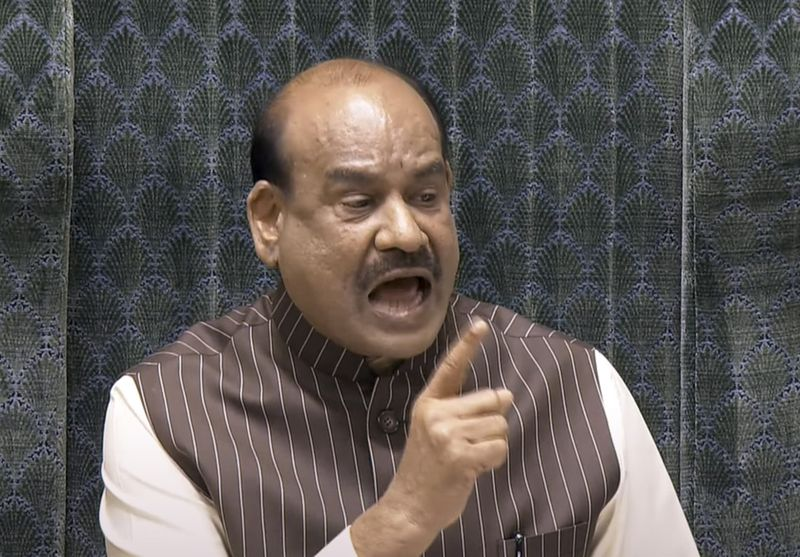
The Reality: A Seat Under Constant Pressure
In reality, the Speaker’s job is one of the most difficult in Indian politics. The Speaker is elected from the ruling party or alliance. Even after assuming office, their political identity does not disappear overnight. This creates a structural tension: how does one remain neutral while having risen through the ranks of a political organization?
For the opposition, every denied chance to speak feels like a political decision. For the government, every moment of disorder feels like an attempt to derail governance. The Speaker stands between these two forces, often becoming the target of anger from both sides.
But in recent years, opposition leaders and civil society groups have argued that this balance is tipping too far in one direction.
The Trigger: When Voices Are Cut Short
Several high-profile moments have fueled the “puppet” narrative. Opposition leaders, including Rahul Gandhi, have publicly complained about being interrupted, muted, or denied the chance to complete their speeches. These moments, captured on live television and shared widely online, often go viral within minutes.
For supporters of the opposition, these clips feel like proof that the Speaker is protecting the government from uncomfortable questions. They see a pattern: sensitive topics raised, ruling party members object, and the Speaker intervenes — sometimes by citing parliamentary rules, sometimes by adjourning the House.
For the ruling party and the Speaker’s defenders, the explanation is different. They argue that parliamentary procedure exists for a reason. If a member violates rules — by quoting unauthorized material, making allegations without notice, or straying off topic – the Speaker is obligated to intervene.
The same action, therefore, is interpreted in two completely different ways:
- One side sees enforcement of rules.
- The other sees silencing of dissent.
The Human Side of the Debate
Beyond politics, there is a deeply emotional dimension to this issue. For many citizens, especially young voters, Parliament is more than a building. It is a symbol of their voice in the system. When they see their chosen representatives being cut off, escorted out, or drowned out by noise, it can feel personal.
A college student watching a live broadcast might not know the exact rule being cited. What they see is a raised hand, a switched-off microphone, and a leader being told to sit down. The emotional takeaway is not about procedure — it is about power.
Families of farmers, workers, and small business owners often say they look to the opposition to raise their daily struggles in Parliament. When those voices appear blocked, it can deepen feelings of exclusion and mistrust.
Why the “Puppet” Label Exists
The idea that the Speaker is a “puppet of the government” comes from a mix of perception, history, and political context.
1. Political Origins of the Speaker
The Speaker is usually a senior leader from the ruling party. Even after assuming office, they often remain a member of that party, though they are expected to act impartially. Critics argue that true neutrality is difficult when political loyalties remain intact.
2. Patterns of Rulings
Opposition parties often track how many times their members are allowed to speak compared to government ministers. When they feel the balance is uneven, they point to this as evidence of bias.
3. High-Profile Disciplinary Actions
Suspensions of opposition MPs, mass expulsions for disorder, and frequent adjournments have added to the perception that the Speaker’s office is being used to manage political outcomes rather than just maintain order.
4. Media and Social Media Amplification
Short video clips without full context spread rapidly online. These clips often become symbols of a larger narrative, even if the full procedural background is complex.
The Speaker’s Defense
Supporters of the Speaker’s office argue that the criticism ignores the chaos that often unfolds in the House. They point out that lawmakers frequently rush to the well of the House, shout slogans, and disrupt proceedings.
From this perspective, the Speaker is not a puppet, but a firefighter — constantly trying to control a political blaze. If one side feels targeted, it may simply be because they are the ones breaking the rules more often, according to this view.
They also emphasize that parliamentary rules are written, public, and longstanding. The Speaker’s job is to apply them, not to negotiate them based on political pressure.
The Deeper Structural Question
Some constitutional experts argue that the real issue is not about any one individual, but about the structure of the system itself. Since the Speaker is chosen by the ruling majority, complete independence may be more ideal than reality.
In countries like the United Kingdom, the Speaker resigns from their political party and contests future elections as an independent. India does not follow this tradition. This difference, experts say, leaves more room for suspicion and political interpretation.
The question then becomes: Should India rethink how it selects and defines the role of the Speaker?
Democracy as a Shared Responsibility
It is easy to place all the burden on the Speaker’s chair. But Parliament is a collective institution. Lawmakers, ministers, opposition leaders, and party whips all shape how debates unfold.
When shouting replaces discussion, and disruption replaces dialogue, the Speaker is forced into a reactive role. At the same time, when the Speaker appears to side consistently with one political camp, trust in the institution erodes.
Democracy, in this sense, is not just protected by one person with a gavel. It is upheld — or weakened — by everyone in the room.
The Emotional Cost of Distrust
Perhaps the most serious consequence of this debate is not political, but psychological. When citizens begin to believe that the referee is biased, faith in the game itself starts to fade.
For a democracy as large and diverse as India’s, this loss of trust can be dangerous. People who feel unheard may turn away from formal political processes. They may express themselves through protests, anger online, or disengagement altogether.
The Speaker’s chair, therefore, is not just a seat of authority. It is a symbol of whether people believe the system still belongs to them.
Between Reality and Perception
Is the Lok Sabha Speaker a puppet of the government? For some, the answer is a firm yes. For others, it is an unfair and politically motivated accusation. The truth, as with many things in democracy, likely lies in the space between perception and reality.
What cannot be denied is this: the Speaker’s credibility is as important as their authority. Without public trust, even the most technically correct ruling can feel unjust. With trust, even difficult decisions can be accepted as part of the democratic process.
The Way Forward
Rebuilding confidence in the Speaker’s office may require more than speeches and statements. Some reform ideas often discussed include:
- Greater transparency in rulings
- Clearer public explanations of parliamentary rules
- Considering structural changes to make the Speaker more independent from party politics
- Encouraging a culture of debate rather than disruption among lawmakers
These steps may not eliminate conflict, but they could reduce the sense of one-sidedness that fuels the “puppet” narrative.
Conclusion: A Chair That Carries the Weight of a Nation
The Speaker’s chair in the Lok Sabha carries more than procedural authority. It carries the emotional weight of a nation’s democratic hopes. Every time a microphone is switched off or a debate is cut short, it sends a message — intended or not — to millions watching from their homes.
Whether seen as a neutral umpire or a political player, the Speaker remains at the heart of India’s parliamentary story. The challenge is not just to follow the rules, but to be seen as fair while doing so.
In the end, democracy is not only about who holds power. It is about who feels heard. And the true test of the Speaker’s independence may not be written in rulebooks, but in the trust of the people who look to Parliament as their final मंच -their final platform – for voice, justice, and representation.