


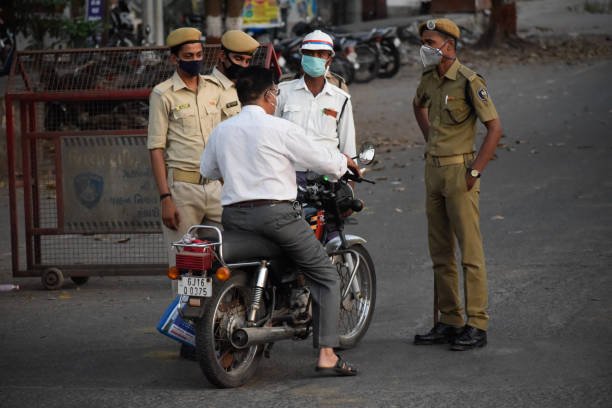
Across many societies, citizens increasingly express a common sentiment: the systems designed to serve the public often appear to operate against them. Whether it is bureaucracy, policing, or regulatory enforcement, ordinary people sometimes feel that institutions prioritize revenue collection and procedural compliance over justice and public welfare. While laws and regulations are necessary to maintain order, the imbalance between strict enforcement of minor infractions and the slow handling of serious crimes raises an important question—does the system always function in the best interest of the people living within it?
This article explores this concern through analysis and a case study, highlighting why many individuals feel disconnected from the institutions meant to protect them.
The Purpose of Governance Systems
Governance systems exist to organize society. Laws, regulations, and institutions are created to maintain order, protect rights, and ensure safety. For example, traffic laws under the Motor Vehicles Act, 1988 aim to reduce accidents, control pollution, and maintain discipline on the roads.
In theory, such laws protect the public. Helmet rules prevent fatal injuries. Insurance laws ensure victims of accidents receive compensation. Pollution checks aim to maintain cleaner air.
However, the experience of enforcement can feel very different from the intention behind the law. When enforcement focuses heavily on easily measurable violations—like documents, fines, or minor infractions—citizens sometimes perceive the system as revenue-oriented rather than service-oriented.
This perception becomes stronger when people simultaneously see delays or inefficiencies in the investigation of serious crimes.

The Enforcement Gap
One of the major criticisms of public systems is the imbalance between easy enforcement and complex justice.
Minor violations are easy to detect and penalize:
- Traffic cameras automatically issue fines.
- Officers can quickly check documents like insurance or pollution certificates.
- Digital challan systems generate penalties instantly.
By contrast, serious crimes require long investigative processes. Cases involving violence or financial crimes often demand:
- Witness testimonies
- Forensic evidence
- Court trials
- Multiple legal procedures
These cases fall under broader criminal laws such as the Bharatiya Nyaya Sanhita, which replaced the Indian Penal Code. Investigations under such laws are complex and time-consuming.
From the citizen’s perspective, this difference in speed can create a powerful impression: the system appears extremely efficient when collecting fines, but slow when delivering justice.
Case Study: A Traffic Fine and Public Perception
Consider a hypothetical yet realistic situation involving a vehicle owner named Ravi.
Ravi owns an old scooter that has become unreliable. After years of use, he decides the vehicle should be scrapped. On the day he plans to take it to a scrapyard, he rides the scooter toward the facility.
During the journey, he is stopped at a traffic checkpoint. The officer checks his documents and finds that the vehicle’s Pollution Under Control (PUC) certificate has expired.
Under the Motor Vehicles Act, driving without a valid PUC certificate is punishable by a fine that can reach several thousand rupees. Ravi receives a challan of ₹5000.
From the officer’s perspective, the situation is straightforward. The law states that vehicles without valid emission certification should not be driven on public roads. The rule exists to control pollution and ensure vehicles meet environmental standards.
However, from Ravi’s perspective, the situation feels different. He believes:
- The vehicle was about to be scrapped.
- He was not using it regularly.
- The penalty seems disproportionately high.
This creates a sense of injustice, even though the law technically supports the officer’s action.
Why Situations Like This Create Distrust
Cases like Ravi’s illustrate a broader psychological and social phenomenon. Laws operate through clear rules, but human experiences operate through context and intent.
Citizens often evaluate fairness based on intention. If Ravi was taking the vehicle to be scrapped, he may feel the penalty should be reduced or waived.
Institutions, however, usually evaluate situations based on compliance, not intention. From the system’s perspective:
- The vehicle was on the road.
- The PUC certificate was expired.
- Therefore the rule was violated.
This difference between human reasoning and bureaucratic reasoning creates friction.
When such experiences happen repeatedly across society, public trust can gradually erode.
Revenue vs Public Service Debate
Another factor contributing to dissatisfaction is the belief that enforcement mechanisms prioritize revenue generation.
Traffic challans, municipal penalties, and regulatory fines contribute significant revenue for local governments. Because these fines are easier to enforce and process, enforcement systems sometimes focus heavily on them.
Meanwhile, complex investigations into serious crimes require large amounts of manpower, expertise, and time. These processes rarely generate revenue and often strain public resources.
This structural difference can create the impression that institutions prefer activities that produce measurable results—like fines—over tasks that require long and uncertain efforts.
Institutional Limitations
It is important to recognize that systems are built by humans and operate under constraints.
Police departments, courts, and administrative bodies often face:
- Staff shortages
- Limited budgets
- Heavy workloads
- Legal procedural requirements
A traffic checkpoint might process hundreds of vehicles in a few hours. By contrast, a criminal investigation may take months or years.
From a systemic perspective, both types of enforcement serve different purposes: traffic rules aim to prevent harm, while criminal law seeks to respond after harm occurs.
However, public perception does not always distinguish between these purposes.
Rebuilding Public Trust
For governance systems to function effectively, public trust is essential. Citizens must believe that institutions exist to protect them, not merely regulate them.
Several steps can help improve trust:
Transparency in enforcement practices helps people understand why rules exist and how penalties are determined.
Proportionality in penalties ensures that fines and punishments match the severity of violations.
Improved communication between authorities and citizens can reduce misunderstandings and improve cooperation.
Finally, consistent progress in solving serious crimes reassures the public that justice remains the central priority.
Conclusion
The tension between citizens and institutions is not new. Throughout history, societies have struggled to balance order, fairness, and efficiency.
Traffic laws, regulatory rules, and enforcement systems are designed to maintain safety and discipline. Yet when enforcement appears rigid or disproportionate, it can create the impression that the system prioritizes rules over people.
The case study of Ravi’s traffic challan illustrates how easily this perception can arise. A rule designed to protect public health becomes, in the eyes of one individual, an example of bureaucratic insensitivity.
The challenge for modern governance lies in bridging this gap between legal correctness and perceived fairness. Systems must enforce rules while still recognizing the human context behind each situation.
Only when institutions balance efficiency with empathy can they regain the confidence of the people they are meant to serve.